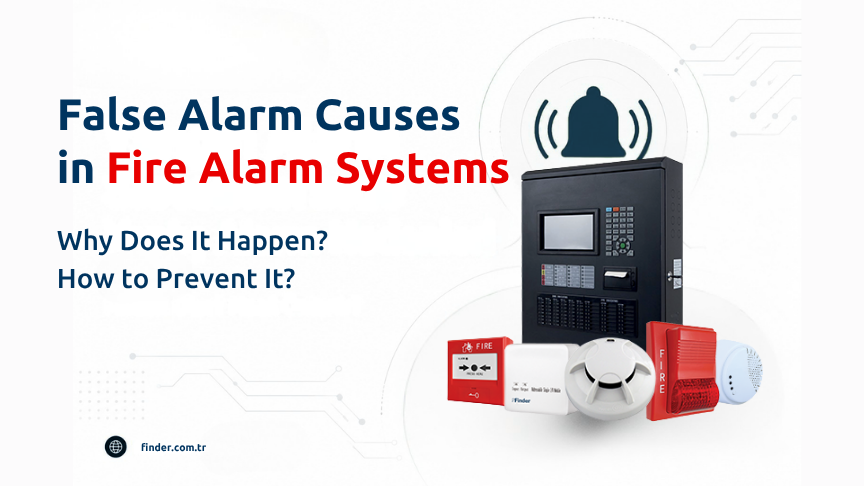
Fire alarm systems are designed to detect fire at the earliest stage and protect lives and property. However, false alarms can disrupt operations, reduce confidence in the system, and create unnecessary costs.
False alarms may result in:
Understanding the causes of false alarms is essential for maintaining a reliable fire detection system.
A false alarm occurs when the fire alarm system activates without an actual fire event.
False alarms may be caused by:
One of the most common causes of false alarms is choosing the wrong detector type.
For example:
Optical smoke detectors installed in kitchens may react to:
Heat detectors or multisensor detectors are often better solutions for these environments.
Over time detectors can collect:
This is particularly common in:
Contaminated detectors may interpret particles as smoke.
High humidity environments can create conditions that trigger false alarms.
Examples include:
Detector placement directly affects system performance.
Common installation mistakes include:
Electrical issues can also generate false alarms.
Examples:
Without regular maintenance:
Routine maintenance is critical.
Older systems may experience:
These factors increase false alarm rates.
Best practices include:
✔ proper detector selection
✔ professional system design
✔ routine maintenance
✔ scheduled testing
✔ detector cleaning
✔ system modernization
Finder provides:
False alarms are not only costly but can also reduce confidence in a fire alarm system.
Reliable fire detection requires:
✔ proper engineering
✔ correct product selection
✔ regular maintenance
Why do fire alarm systems generate false alarms?
False alarms are commonly caused by incorrect detector selection, dust, humidity, electrical interference, and poor maintenance.
What is the most common cause of false alarms?
Contaminated or improperly positioned detectors are among the most common causes.
How can false alarms be reduced?
Proper system design, regular maintenance, and correct detector selection significantly reduce false alarms.
Can poor maintenance cause false alarms?
Yes. Dirty or aging detectors can become overly sensitive and trigger false alarms.
Do older systems generate more false alarms?
Yes. Aging sensors and outdated technology often increase the likelihood of false alarms.
 TR
TR